As an eye surgeon, I spend my days looking at the eyes through very specific specialised gadgets at Karthik Netralaya. Over the last decade, I’ve noticed a deeply concerning trend; children and young are coming in with thicker and thicker glasses at younger and younger ages. It is estimated that 10% of population will have high myopia by 2050! WHO (2019) estimated that at least 220 crore people globally have a visual impairment, of which over 100 crore instances could have been prevented or remain unaddressed. As the population ages the people affected by age-related eye diseases continues to rise. Modern lifestyles, such as prolonged screen time, near-work activities, and reduced time outdoors, are reshaping how people use their eyes. These changing behavioural patterns have fuelled epidemics of childhood myopia and dry eye disease. The mismatch between the growing burden of eye disease and the low availability of specialised care has become a crucial public health challenge. Increasing public awareness matters most in such scenario.
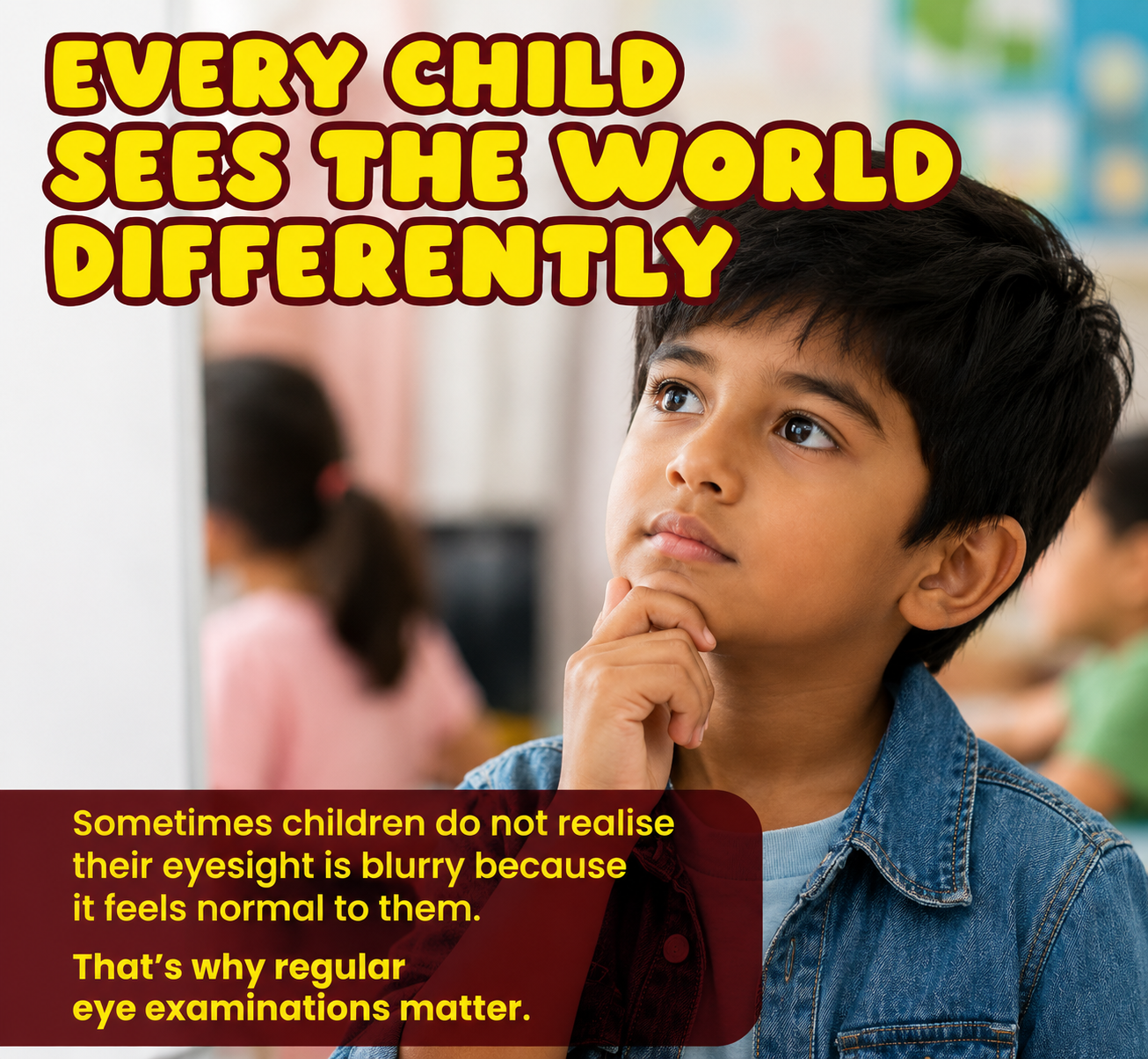
If your child is diagnosed with short sight or myopia, your first instinct as a parent is probably to deny that your child is partially blind. You did notice that your tinytot did not read upto the last line in the vision chart! Or performs poorly at classes; or walks close to TV to watch a cartoon. Or is becoming an introvert not playing around with other kids! Somebody will tell you that it will get corrected by itself with age, or by eating lots of carrots. Everyone will hound on the child saying that TV and smart phone is the cause! The system savvy ones of you will search on google, or AI, and would get them a cute pair of frames from a spectacle outlet and consider the problem is solved. But do you know that eye illnesses in a child are best detected and treated at an eye doctor check up at the age of 3 years? Spectacles if needed are best started at that age and if their glass power changes every year, they don't just have a vision problem—they have progressive myopia. They may have an Amblyopia too.
Today, eye surgeons no longer view myopia as just an inconvenience corrected by a stronger lens. It is a progressive condition. The good news? Modern eye care has evolved from simply correcting blurred vision to actively controlling its progression.
The Root of the Problem: Why It’s More Than Just "Bad Eyesight"?
To understand why progressive myopia matters, we have to look at the anatomy of the eye. In a standard eye, light focuses perfectly on the retina at the back of the eye. In a myopic child, the eyeball grows and becomes longer, from front to back. The Hidden Risk: As the eyeball elongates like a balloon stretching out, the retina and delicate tissues inside the eye become thinner. This stretching increases the risk of serious, sight-threatening conditions later in life, including glaucoma, cataracts, and retinal holes and detachment. So our goal is not just to help your child see the world better today, but to protect their vision decades from now.
The Modern Arsenal: How We Slow It Down
Fortunately, we now have clinically proven treatments that can slow down eye elongation by 40% to 60%. Here are the primary tools we use today:
1. Orthokeratology ("Ortho-K")
Think of this as orthodontics for the eyes. Children wear special contact lenses while they sleep. These lenses gently reshape the cornea overnight. In the morning, the lenses are removed, and the child can see better all day without glasses or contacts. The treatment now is known to slow down eye growth.
2. Low-Dose Atropine Eye Drops
A nightly drop of a highly diluted medication (atropine) has been shown to significantly slow down myopia progression. It is safe, easy for young children, and doesn't affect their ability to read or see in daylight like standard dilating drops do.
3. Peripheral Defocus Glasses and Contacts
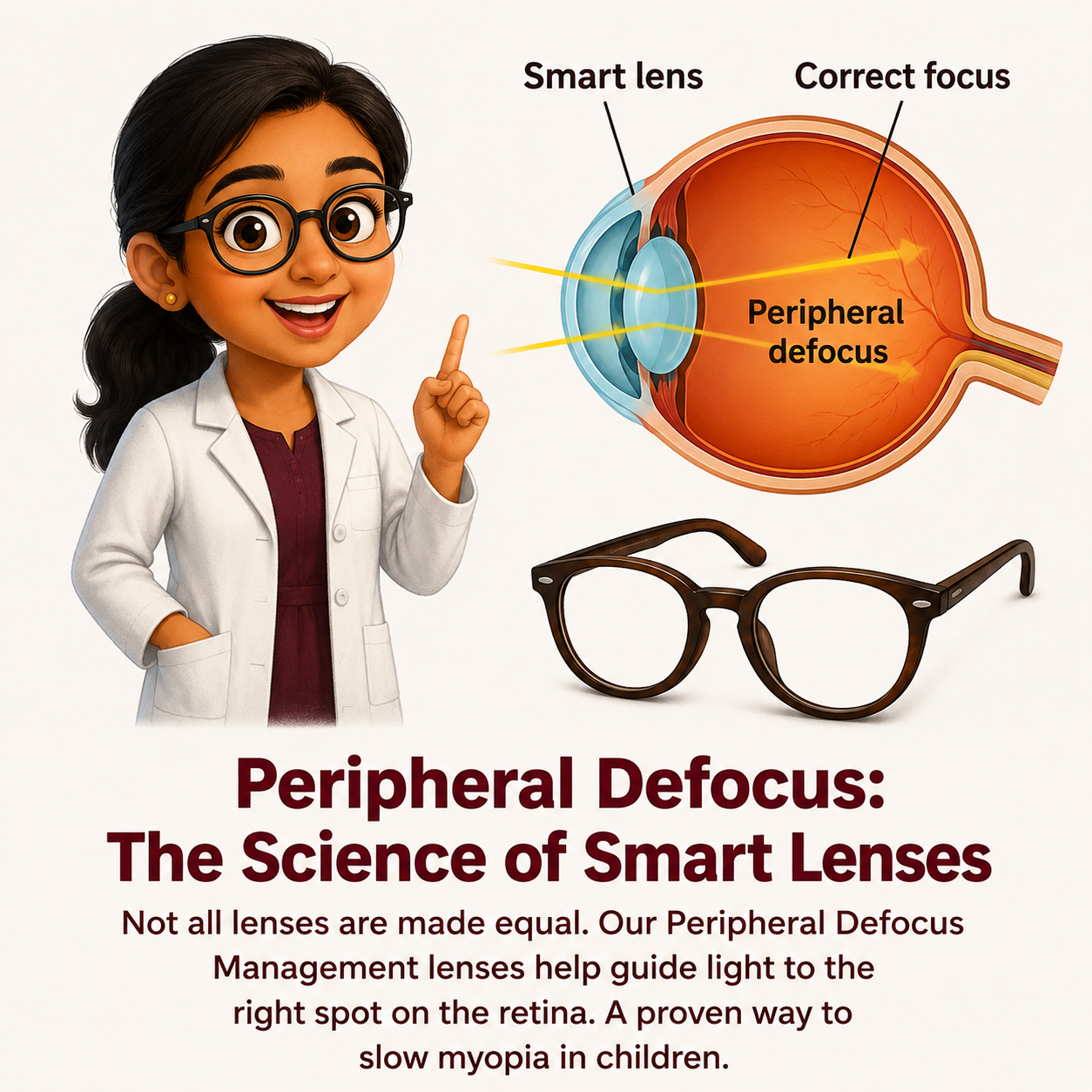
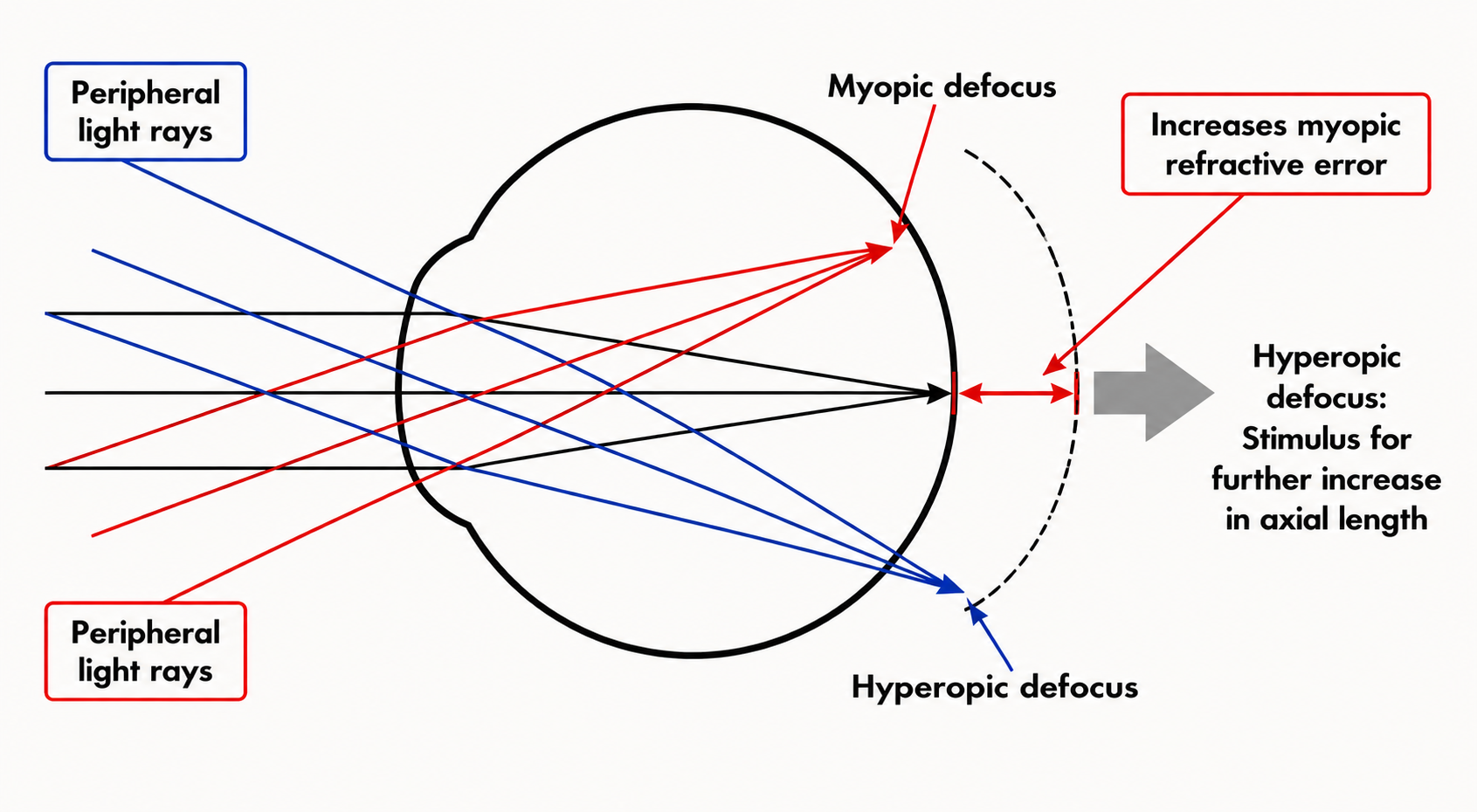
A child should wear full powered glasses all the time to prevent progression! This is a big change in our understanding till recently when we used to under-correct the myopia. Today, there are specialized Myopia control glasses (like DIMS or HALT technology) and soft multifocal contact lenses, which are engineered with a central zone for clear vision, surrounded by a "treatment zone" that modifies the peripheral light. This optical trick sends a powerful signal to the brain to stop the eyeball from growing longer. In a myope wearing usual single-vision lenses the central vision is corrected, but the peripheral light is directed to focus behind the retina. This peripheral hyperopic defocus acts as a biological signal that stimulates the eye to grow longer, worsening the myopia. This can be corrected by achieving a Myopic defocus using myopia control lenses. They maintain clear central vision and the peripheral myopic defocus signals the eye to stop elongating, slowing the progression of myopia.

What Parents Can Do Today: The "Green Outdoor" Prescription
While medical interventions are powerful, lifestyle choices play a massive role. The digital age has trapped our children indoors, focusing on screens just inches from their faces.
The 2 Hour Rule: Research consistently shows that spending 2 hours a day outdoors in natural sunlight drastically reduces the risk of myopia progression. Sunlight triggers the release of Dopamine in the retina, which naturally acts as a brake on eye elongation.
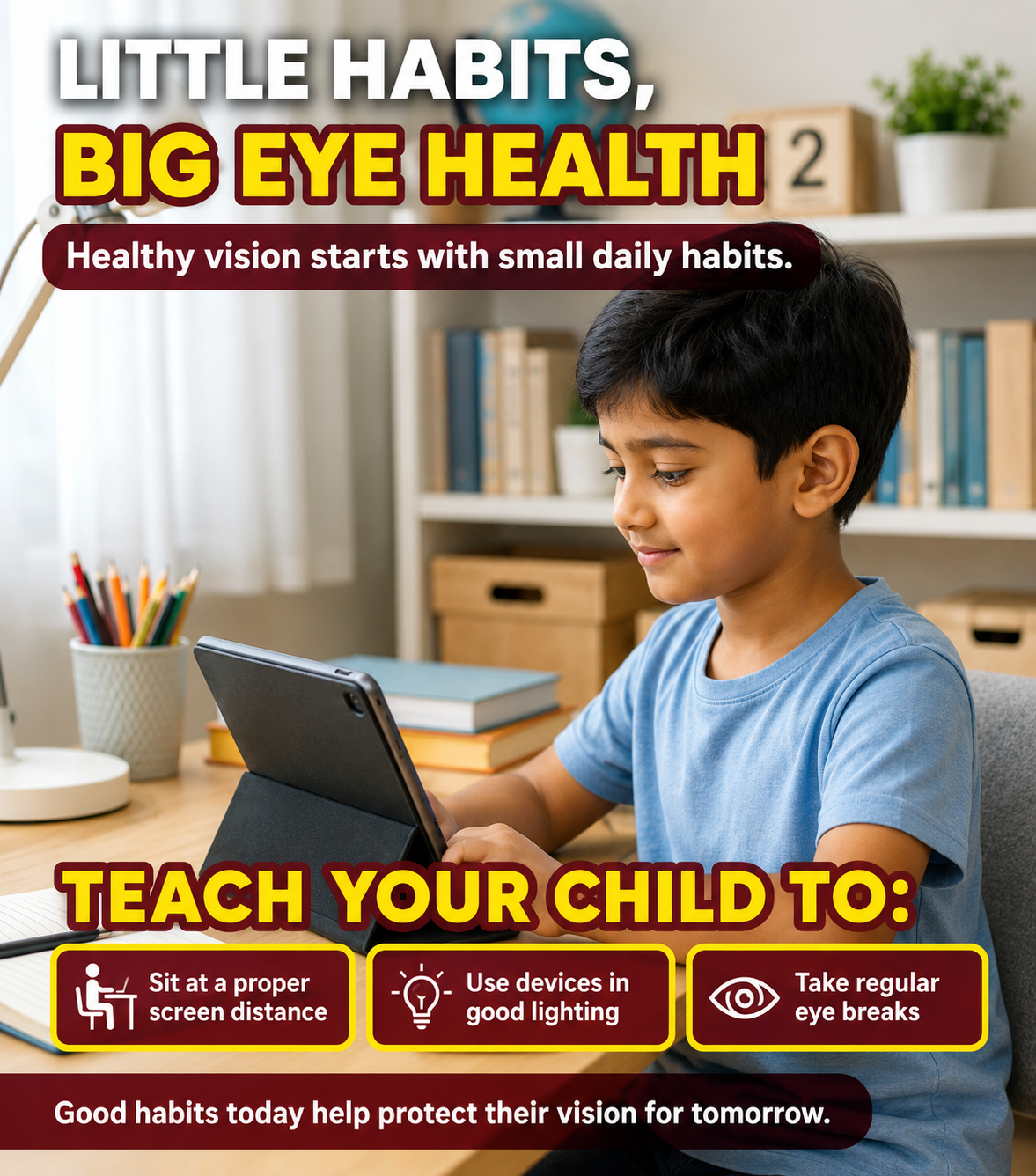
The 20-20-20 Rule: When doing close-up work or using screens, have your child take a break every 20 minutes to look at something 20 feet away for at least 20 seconds.
Keep Your Distance: Encourage children to hold books and screens at least an arm's length away (about 14 to 18 inches). No screen time for kids under 8 years and for others, minimise all kinds of screen time to less than one hour.
Summary of current research on Myopia
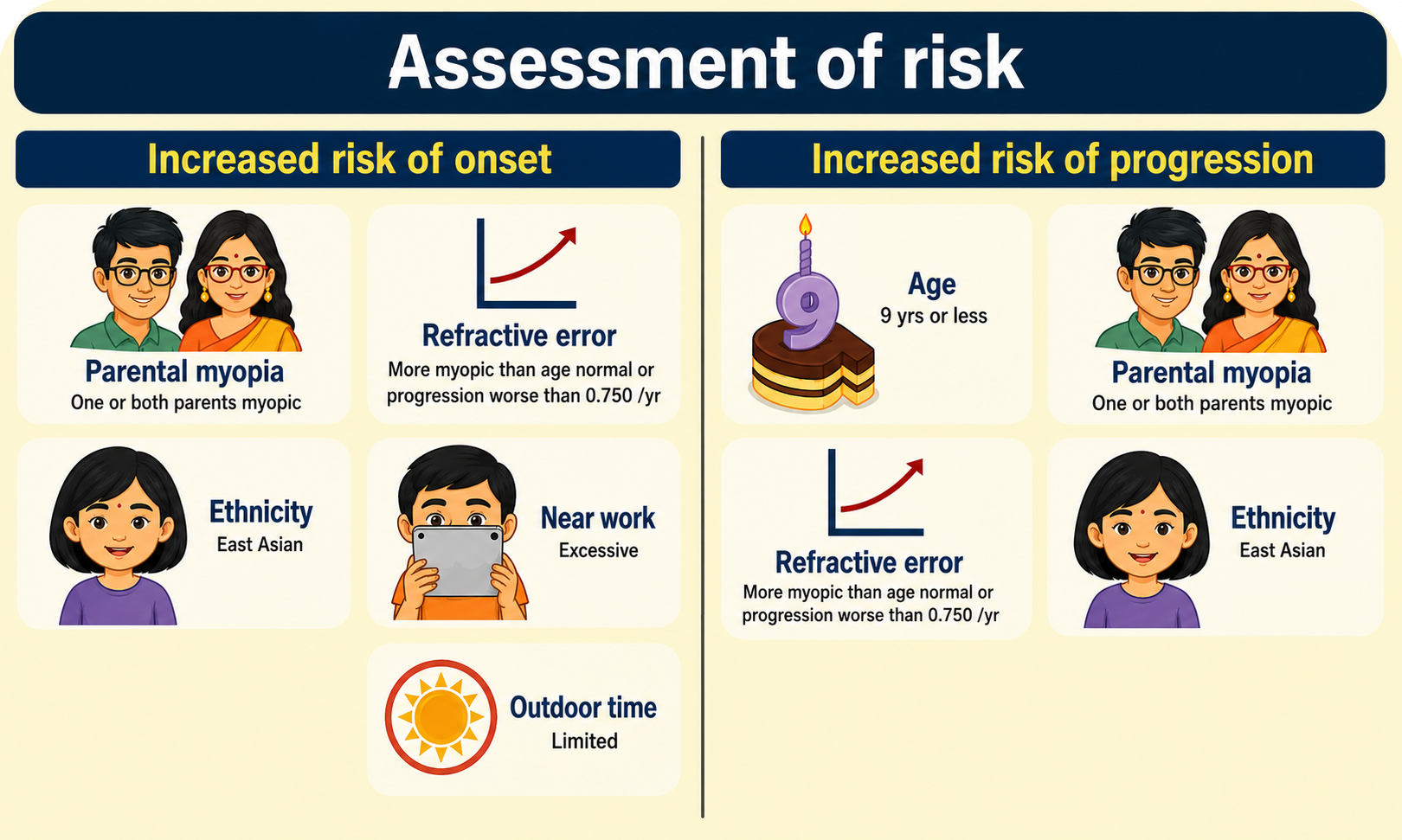
Age: Increased rates of progression are observed in younger children. Additionally, the younger the child becomes myopic, the more likely they will develop higher levels of myopia.
Outdoor time: Low outdoor time (less than 90-120 minutes per day) has been associated with a 2-3 times increased risk for the onset of myopia.
Amount and type of near work: Recent studies indicate that increased near work time (> 3 hours per day) may increase the risk of myopia. Near work on digital devices, with as little as 30-60 min / day, is associated with a 2-3 times increase in the development of myopia
Ethnicity: Increased prevalence and rates of progression have been observed in children of East Asian descent versus Caucasian.
Parental myopia: If one parent is myopic, the child is at 3 times the risk to develop myopia, and 6 times the risk if both parents are myopic.
Refractive error: If a child is less hyperopic than +0.75D at age 6, they are at increased risk of becoming myopic.
Gender: In general, girls tend to progress more quickly than boys.
Act Early: A Call to Action
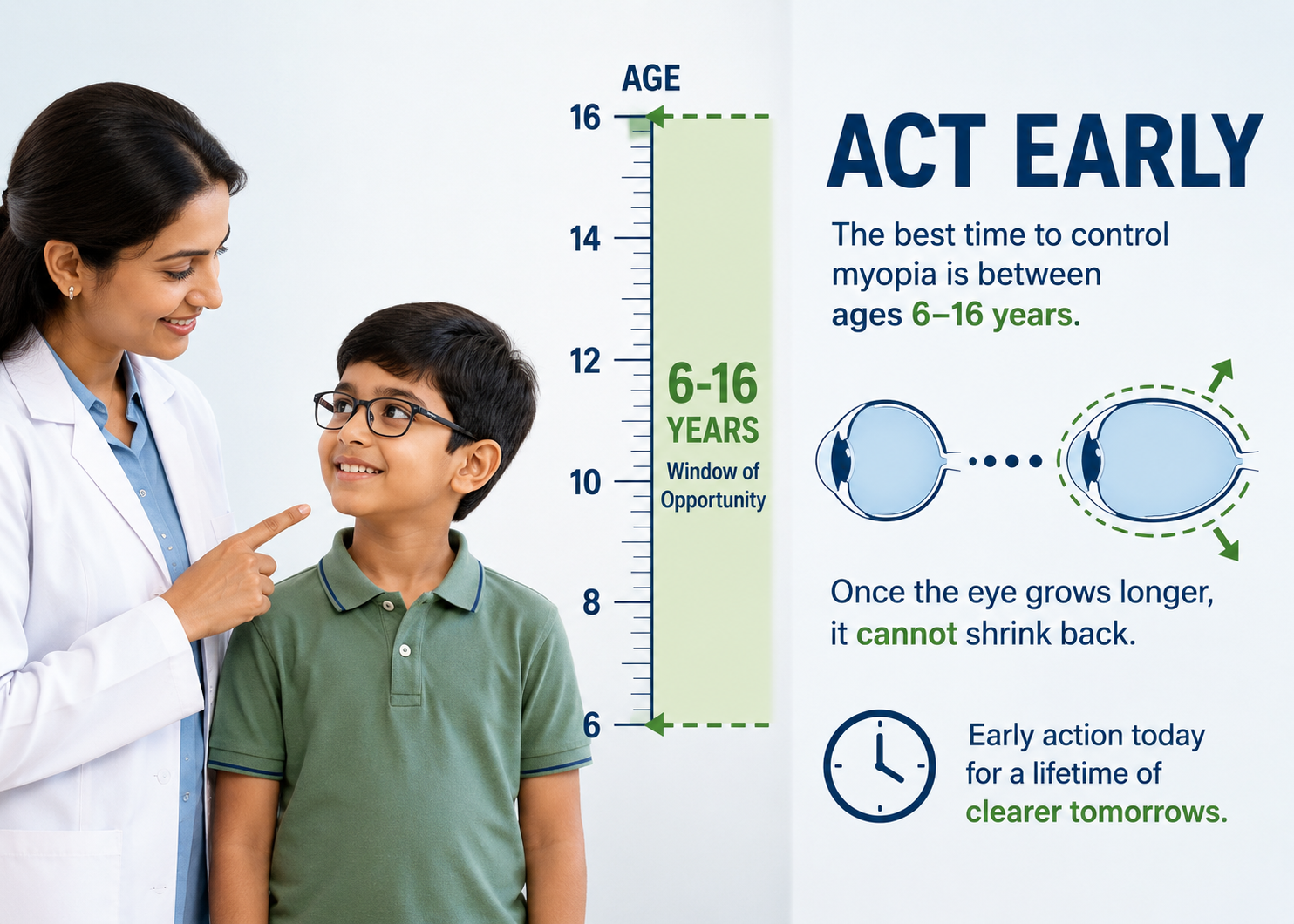
The window of opportunity to control myopia is narrow. It aligns perfectly with your child’s growth spurts, typically between the ages of 6 and 16. Once the eye has grown too long, we cannot shrink it back. If your child’s vision is changing every time you visit us, don’t just upgrade their lenses. Ask us about myopia management. Together, we can rewrite the future of your child’s eyesight, ensuring they see a brighter, clearer world for the rest of their lives. Healthy eyes are immensely important in tomorrow’s competitive Digital World!